LETTERS TO OLD HOUSE
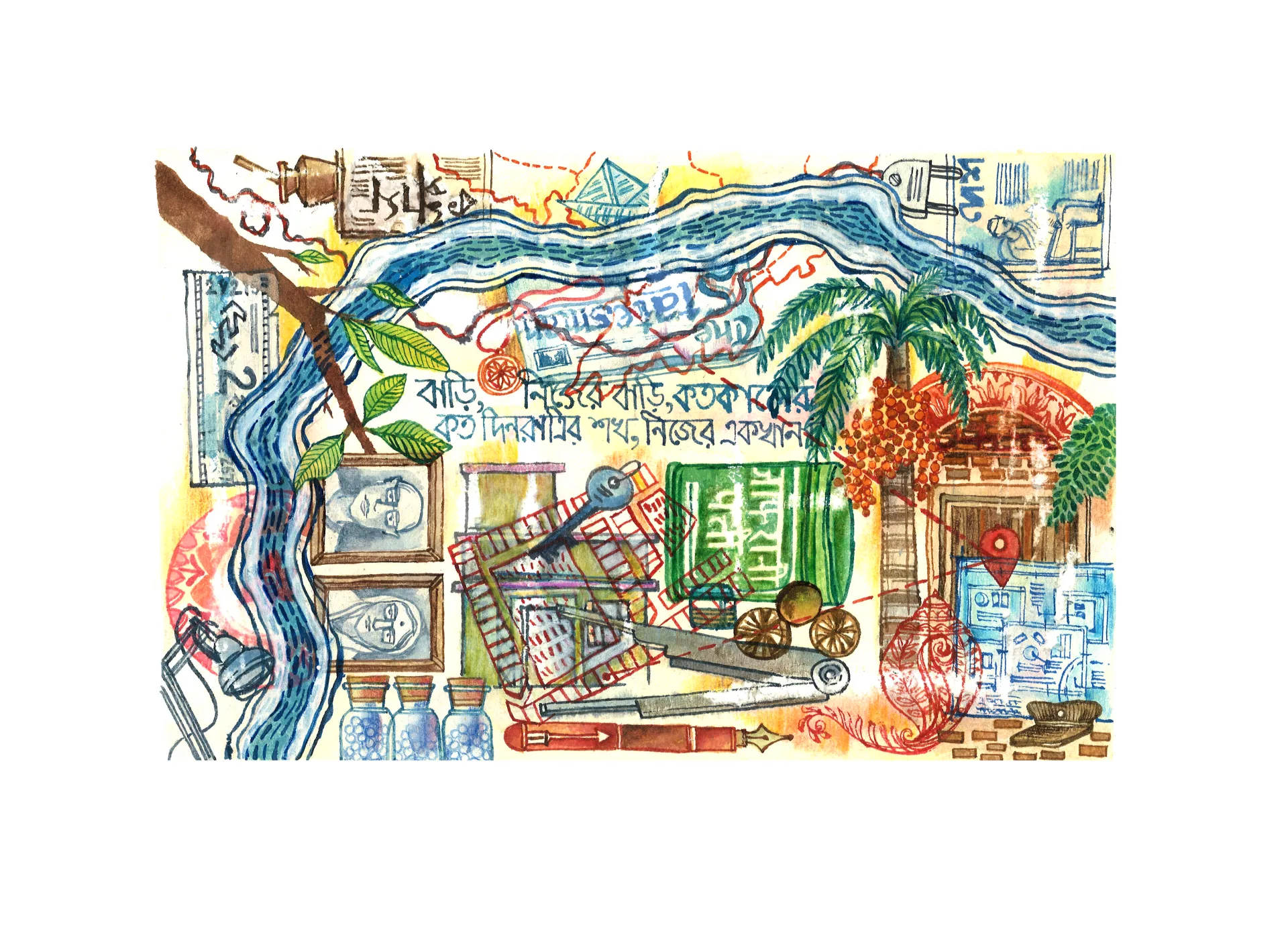
The house I grew up in, is not the house I live in. The old house my grandparents built made way for the new. Yet in my dreams the old house keeps coming back. These drawings are a conversation with the objects and memories of a life once lived there, interspersed with my grandmother Amiya Sen's writings, her refugee memories and a longing for a 'house of one's own'.
LIKE BLOOD ON THE BITTEN TONGUE
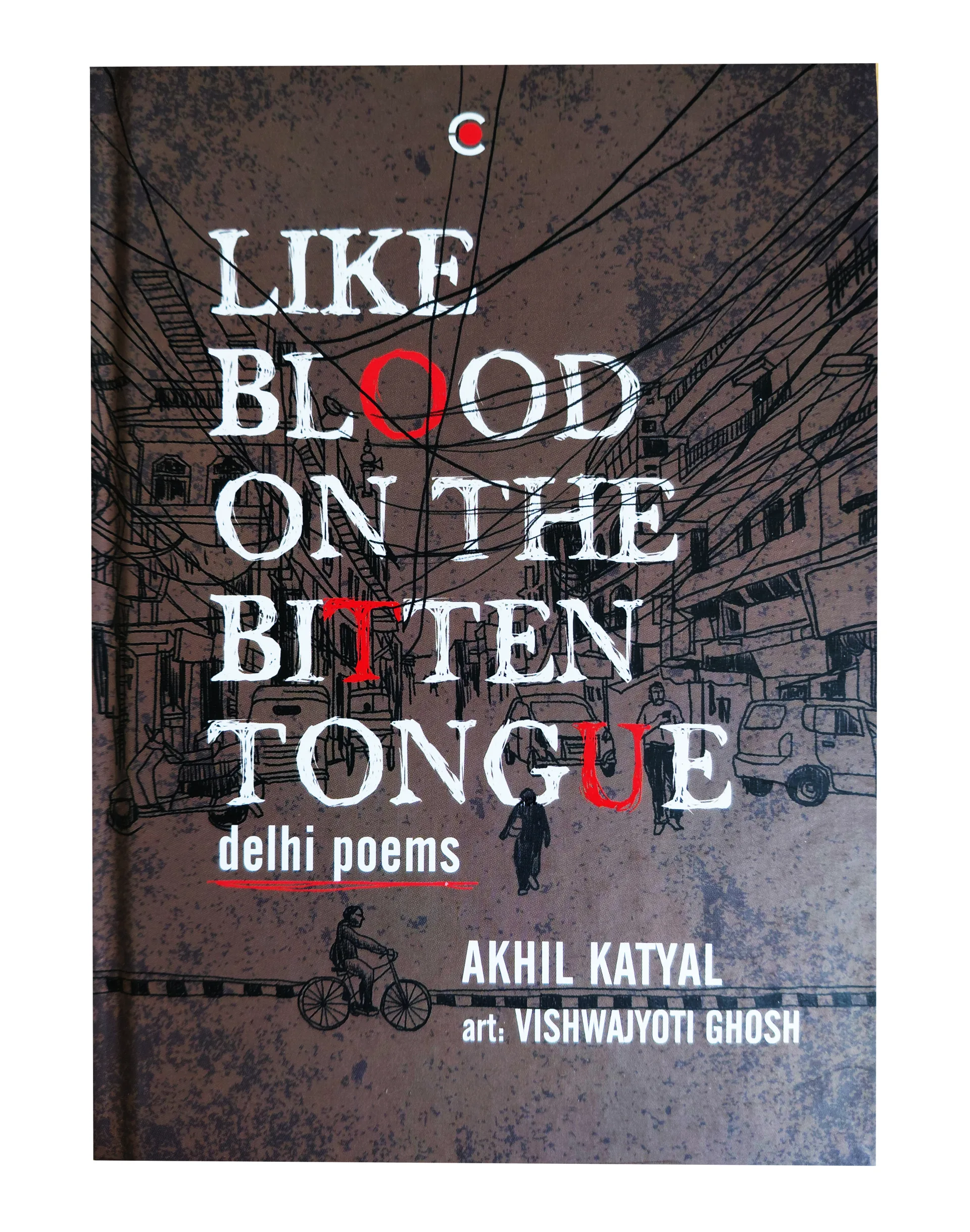
Illustrating for poems is an old passion since college. But to visually articulate one's city of living through the witty, quirky poems of Akhil Katyal was a privilege. These drawings are a visual response to Akhil's poems and not illustrating them per se.
MIX TAPE
These illustrations are a mixed lot for fiction and non-fiction writings for The Little Magazine. This includes illustrating academic essays, short stories, poetry and plays. These are a small selection that has survived from a large body of work from the analog days.
/001.webp)
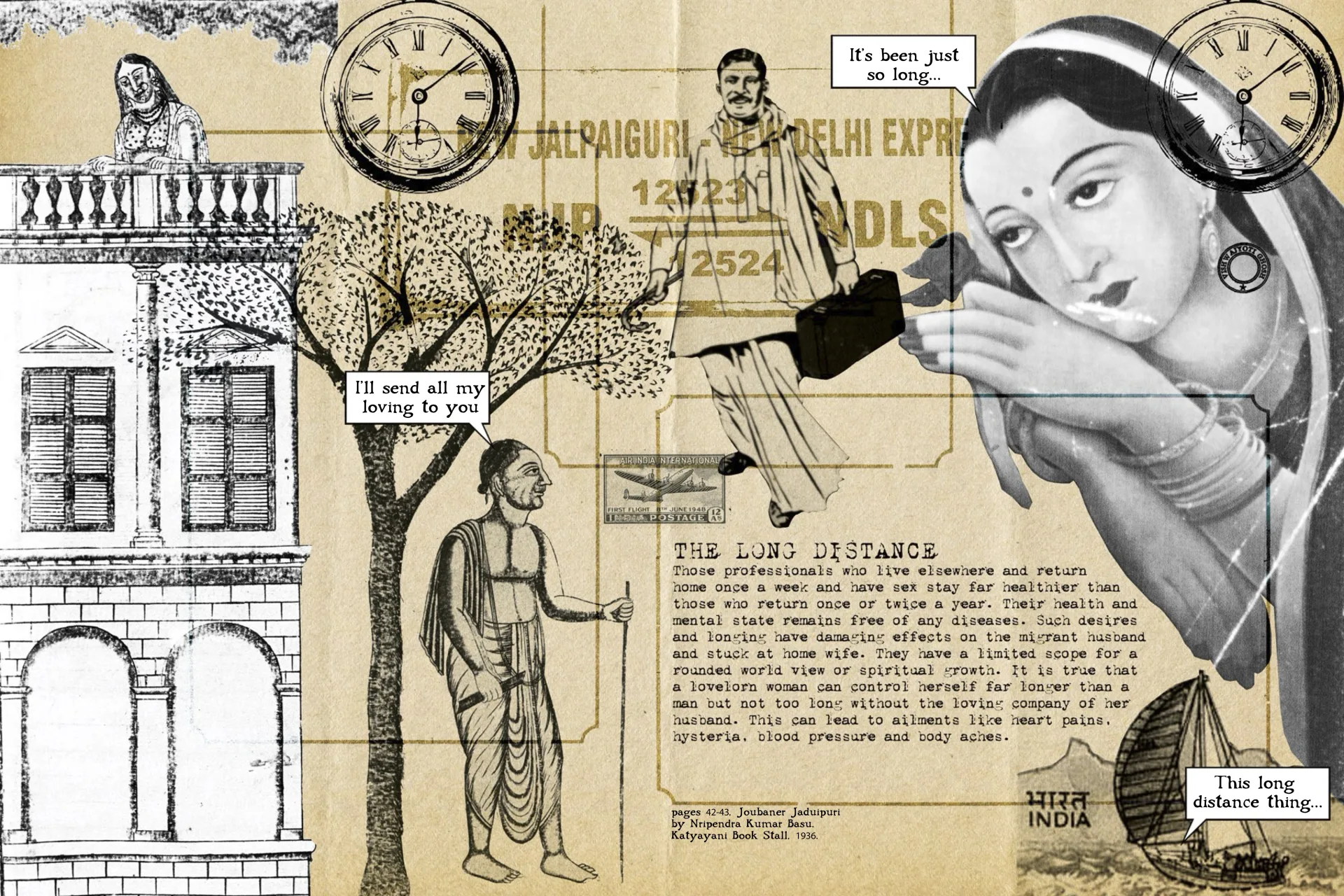
BENGALI SPRING / WINTER SUN
As a recipient of the IFA Archive Fellowship, I was exploring the The Hiteshranjan Sanyal Memorial Archive in Jadunath Bhavan Museum and Resource Centre, Kolkata. The project's intention to visually reinterpret some archival material and create a new body of work that would come together as an exhibition of texts, books and visual interpretation of the times. Digging into the archives, I found a vast treasure of books that could be termed as bestsellers of their times (pre and post independent India). These were books on relationships, eroticism, sexuality and relationships. These books were written with a highly educational slant and could be termed as text-books of another kind – in the pulpy booklets by Nripendra Kumar Basu (1898-1979) who mainly wrote on sexuality in a popular Bengali form incorporating contemporary theories of sexuality with a mix of pulp and his own opinions. The texts had both an educational slant and a moral tone, often highly didactic in nature. Mixing up with found materials and extracting from the Battala woodcuts (these prints, produced in the Battala neighbourhood of Kolkata were known for their affordability, bold imagery, and accessibility, making them popular among the burgeoning middle class from the early 19th century and onwards), visuals from vintage ads and calendars, these compositions thus emerged as a visual response to the Texts.